
← Back to Method Diagram
Purpose of Services & Use Cases
- Research reveals which User Types require which Services.
- Services are broken into their individual Use Cases as part of the Service ecosystem. These are usually pre-existing Services provided by the organisation (eg. bank accounts, flights, tax return etc).
- Use Cases are specific user intent, extrapolated into User Journey paths and outcomes, and into Service Design Blueprints. These are either existing Use Cases to be optimised or new ones to be added.
- User Journeys define the specific behaviours we use to create testable Prototypes that allow the user to experience those paths and outcomes.
- Service Design Blueprints define the steps the process takes at a user, interface, frontstage, backstage and support levels to ensure we can deliver the Use Cases technically and organisationally.
- Use Cases are specific user intent, extrapolated into User Journey paths and outcomes, and into Service Design Blueprints. These are either existing Use Cases to be optimised or new ones to be added.
- Services are broken into their individual Use Cases as part of the Service ecosystem. These are usually pre-existing Services provided by the organisation (eg. bank accounts, flights, tax return etc).
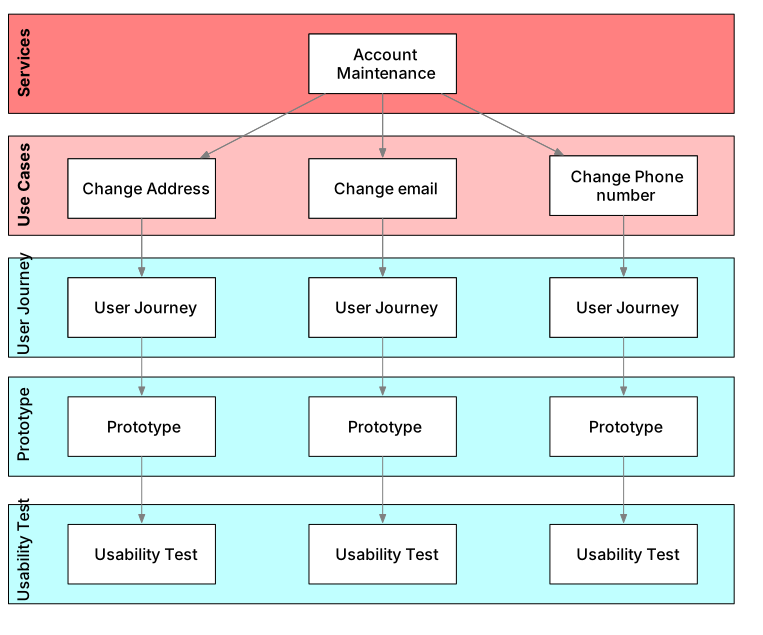
Below is a simple example:
Services translate into high level capabilities (Epics if you prefer Agile) that a solution must provide to address valuable user needs. Use Cases are the commensurate tasks that make up each Service. User Journeys map all the steps that allow a Use Case to function elegantly and optimally.
- Services define groups of related goals (Use Cases).
- Use Cases are the actionable tasks that collectively deliver the Service.
- User journeys then describe the happy and unhappy paths of each Use Case, shaping and optimising the user’s lived experience of each.
Value of Defining Services & Use Cases
Cataloging these Services and defining their individual Use Cases ensures that we have discovered all of the current functionality and explored any additional valuable functionality, for all User Types, within the fullest scope of the product or service in order to deliver on the validated and valuable user and business goals. This avoids a wasted time/cost or lost opportunities later because we avoid assumptions and omissions now.
- Project functionality: The identification of a complete set of Use Cases means we do not miss out essential functionality from the prototype and avoid delivering substandard products or services.
- Project Scope Validation: Comprehensively defined Services and Use Cases validate (or invalidate) the assumed project scope. They allow us to communicating any delta so we can review and accommodate (or mediate) any efficacy, time or cost changes.
- Optimal behaviour modelling: Identifying the User Type’s required Services and their Use Cases, ensures we architect and deliver optimal functionality and process, remove duplication of effort and deliver the most value from the product or service.
- Accelerate agile and reduce developer time and cost: The identification of the Services and their commensurate Use Cases allows visibility and initiates the creation of stub Agile Epics (from Services) and stub functional User Stories (from Use Cases) even at this early stage of the project.
- Delivery Team Empowerment: Well defined Services and Use Cases allow the delivery teams the greatest lead time, giving them the opportunity to interrogate the requirements, identify the team sizes, skills and technologies as early as possible. This reduces risk, cost and increases delivery team efficiency.
- Expectation management: Visibility of the required functionality (often assumed by project leaders) makes managing client expectations of the scope, cost and effort involved easier and earlier. Honest conversations, based on an understanding of the functionality, allow scrutiny of the technology, security and governance limitations, leading to a better visibility of the challenges, creating a narrative of trust and partnership, and avoiding one of blame and mistrust.
- Decision Making Empowerment: Service and Use Cases empower client, business and delivery leads to make informed decisions of which Use Cases will deliver the greatest value, based on project priorities and goals, rather than just time and costs. Once again, this also builds trust between the project team and the client.
Anatomy of a Service & Use Case Document
This is the template for how I layout Services and their component Use Cases. Deep explanation of the Use Cases is not necessary here as…
Examples
NB. For security clearance and NDA reasons, some elements of the example files may be redacted, changed or removed.
Secure Access Service
Example of a Secure Access service and some of the more common Use Cases that make it up in a secure software system
View ArtefactService & Use Case Hierarchy
An Account Maintenance example of the hierarchy that starts at a Service and ends with a Prototype that usability tests the Use Cases
View Artefact