
← Back to Method Diagram
Important Thematic Insights are the research data with the most value, relevance and impact on the problem to be solved – directly or indirectly
Purpose of Thematic Insights
I covered Thematic insights briefly in the Interview and Observation section, but there’s more to them than just what comes out of interviews.
Insights are also gained from stakeholders, SMEs (subject matter experts), technology, historic data, water-cooler conversations, third party suppliers, business analysis, support data and even competitor analysis. The diagram below gives a sense of the kinds of data we gain from the three organisational domains, that can lead to insights.
Thematic insights qualitatively synthesise patterns of user needs, failures, and successes across the collected research data. Where available, these themes are supported by quantitative evidence to indicate prevalence, severity, and risk. Together, this enables teams to prioritise the most valuable and necessary problem areas, informing subsequent requirement definition and solution design.
Value of Thematic Insights
1. The data proves the most significant and valuable issues to address
2. Project/Product owners can make informed decisions about function, process and, if necessary, MVC prioritisations that lead to the greatest impact, value and efficacy when planning delivery and solution scope.
3. Provides value based data to realign stakeholder expectations – if necessary
4. As problem Solvers we know which Use Cases and their User Journeys are most valuable.
4. We can see where in domain the biggest problems lie – process, people, software, data etc – helps define the type of solution and enables us to involve the right teams and SMEs early.
What We Get From Qualitative & Quantitative Thematic Insights
Qualitative components (inherently qualitative)
- Theme identification (what the issue is)
- Meaning, intent, motivation, beliefs
- Language, framing, mental models
- Context and causality (“why”)
- Edge cases and emergent patterns
These come from interpretation and synthesis of narrative data.
Quantitative components (attached to themes where relevant)
- Frequency: how many participants expressed the theme
- Prevalence: % of users affected
- Intensity/severity ratings
- Confidence/importance scores
- Correlation with behavioural metrics (e.g. drop-off, failure rate)
- Segment comparison (e.g. novice vs expert)
These do not make the theme itself quantitative; they quantify evidence around the theme.
Beware Correlation Without Causality
It’s important to evaluate insights carefully, being certain of true causality and not simply compelling correlation insights and terrible recommendations. Below are two true correlations in data, without true causality:
Pirates and Global Warming
- Observation: As the number of pirates has decreased, global temperatures have risen.
- Correlation insight: Pirates can stave off global warming – we need more Pirates.
- Reality: it’s simply a coincidence over long timelines.
Shark Attacks, Drownings and Ice Cream Sales
- Observation: As ice cream sales go up so do shark attacks and drownings
- Correlation insight: Sharks attack more when people eat ice cream and ice cream causes people to drown – we need to ban ice cream for safety reasons
- Reality: More people go to the beach when it’s hot. The higher beach attendance increases both ice cream consumption, the chance of drownings and shark attacks.
Anatomy of a Thematic Insight
We can produce either Short or Full Thematic Insight reports.
Short Thematic Insights Anatomy
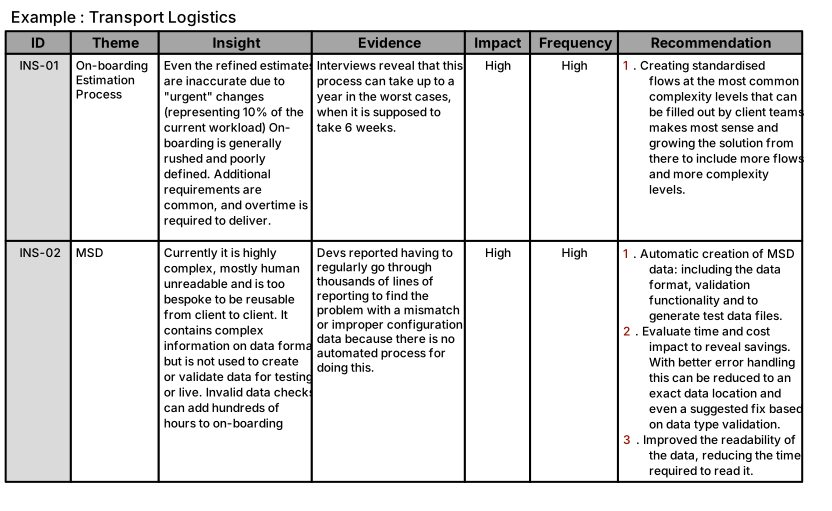
The Short version shows the thematic insight and the commensurate recommendation (action or further research) resulting from it. I use this one for presentations, collaboration and discussion with relevant SMEs/stakeholders etc who are busy and just want a snapshot of the problems and the recommended approach to addressing them.
Full Thematic Insights Anatomy
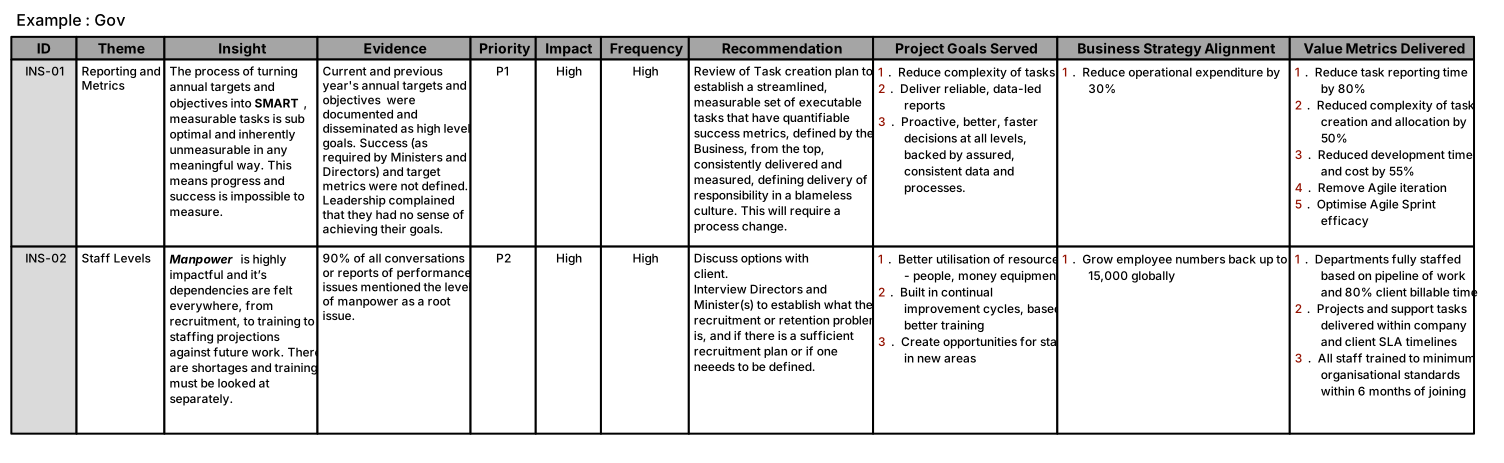
The Full version contains the same as the basic version but extends each theme to demonstrate how it aligns with the project goals, elements of the current business strategies and what value metrics will be achieved (demonstrating measurable success). This is really useful to press home the alignment with the organisation’s goals and overcome stakeholder and leadership resistance, whilst building trust that we are delivering on their priorities.
Examples
NB. For security clearance and NDA reasons, some elements of the example files may be redacted, changed or removed.
Thematic Insights – Short
Service Design and UX research thematic insights from an international logistics project
View ArtefactThematic Insights – Full
Service Design research project demonstrating two entries for a Government performance project
View Artefact