
← Back to Method Diagram
“The right information, to the right people, at the right time.” – Peter Drucker (management principle)
Purpose of the Comms Plan
Good comms are critical for heading off problems, building trust, providing transparency, removing project friction, ensuring the right solution is developed and proactively dealing with blockers or unexpected unknowns in a constructive and collaborative way as they come to light.
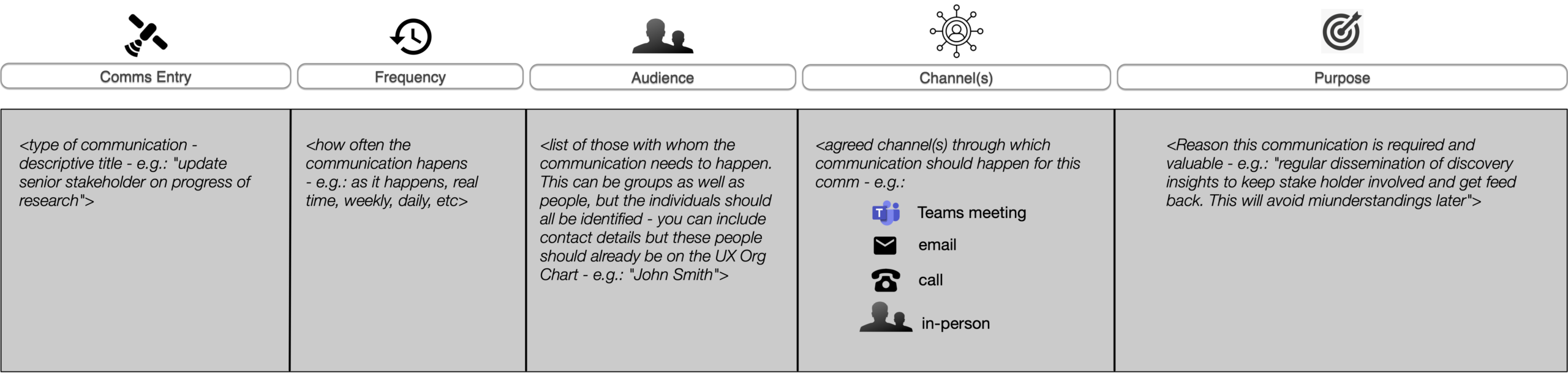
The Comms Plan enables this by establishing communication needs early with the right people. It identifies the channels, people, value and frequency of these communications in collaboration with the recipients.
Recipients are those who have some sort of stake in the project – from development teams to third party partners, to senior client decision makers etc.
Value of the Comms Plan
- Consistent, open, transparent communication, to the satisfaction of the client and project teams – no secrets and a two-way growth of trust.
- Avoids the assumption of communication and alignment (false consensus bias) by providing an agreed schedule and mindful visibility of the facts.
- The right people get the right information at the right time.
- Prevents clients ‘changing their minds’ by creating a positive narrative of visibility, collaboration, review, approval and accountability (for the client as well as the delivery teams) at every important step of the discovery, functional architecture, testing and delivery.
- We ensure everyone can make careful considered decisions, based on clear, reliable data, as early as possible.
- This sets a platform and a method between the client and the supplier where open discussions of requirements, insights and challenges can be had as soon, and as constructively, as possible.
- It builds a healthy relationship based on trust and honesty, where issues are resolved collaboratively, early and quickly, without blame or finger pointing.
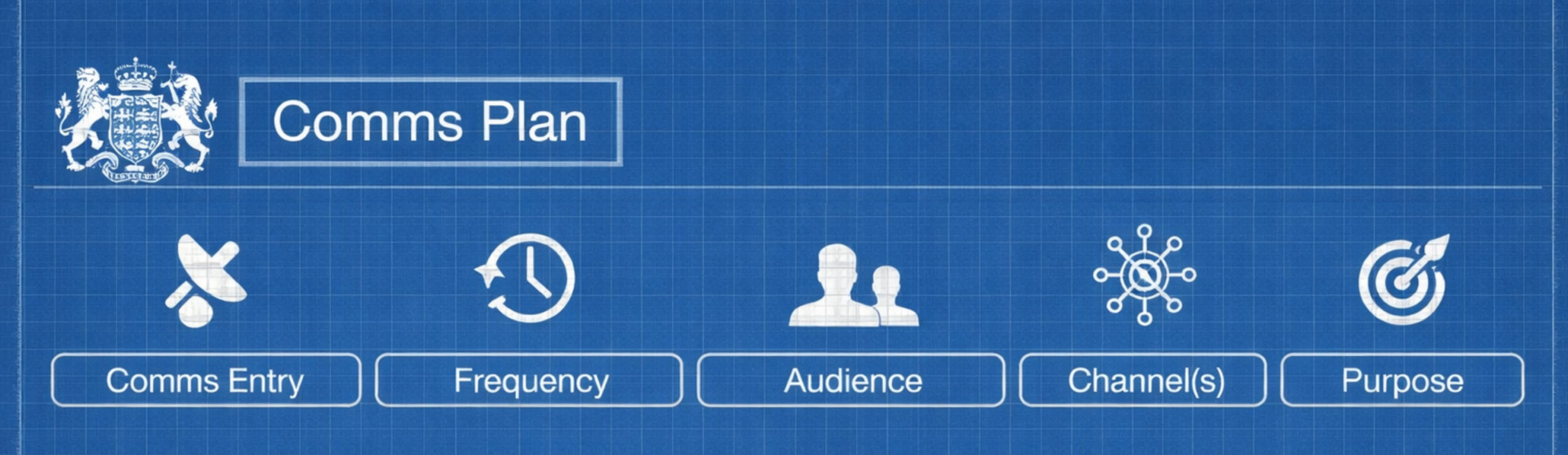
Anatomy of a Comms Plan Entry
Examples
NB. For security clearance and NDA reasons, some elements of the example files may be redacted, changed or removed.
Public Sector Comms Plan
A comms plan allowing senior stakeholders and under secretaries, project management, project delivery and special interest groups to give and receive valuable input on the project in their preferred cadence and via their preferred channels
View Artefact